The Harness-First Era: Why Databricks' Coding Agent Benchmark Changes Everything

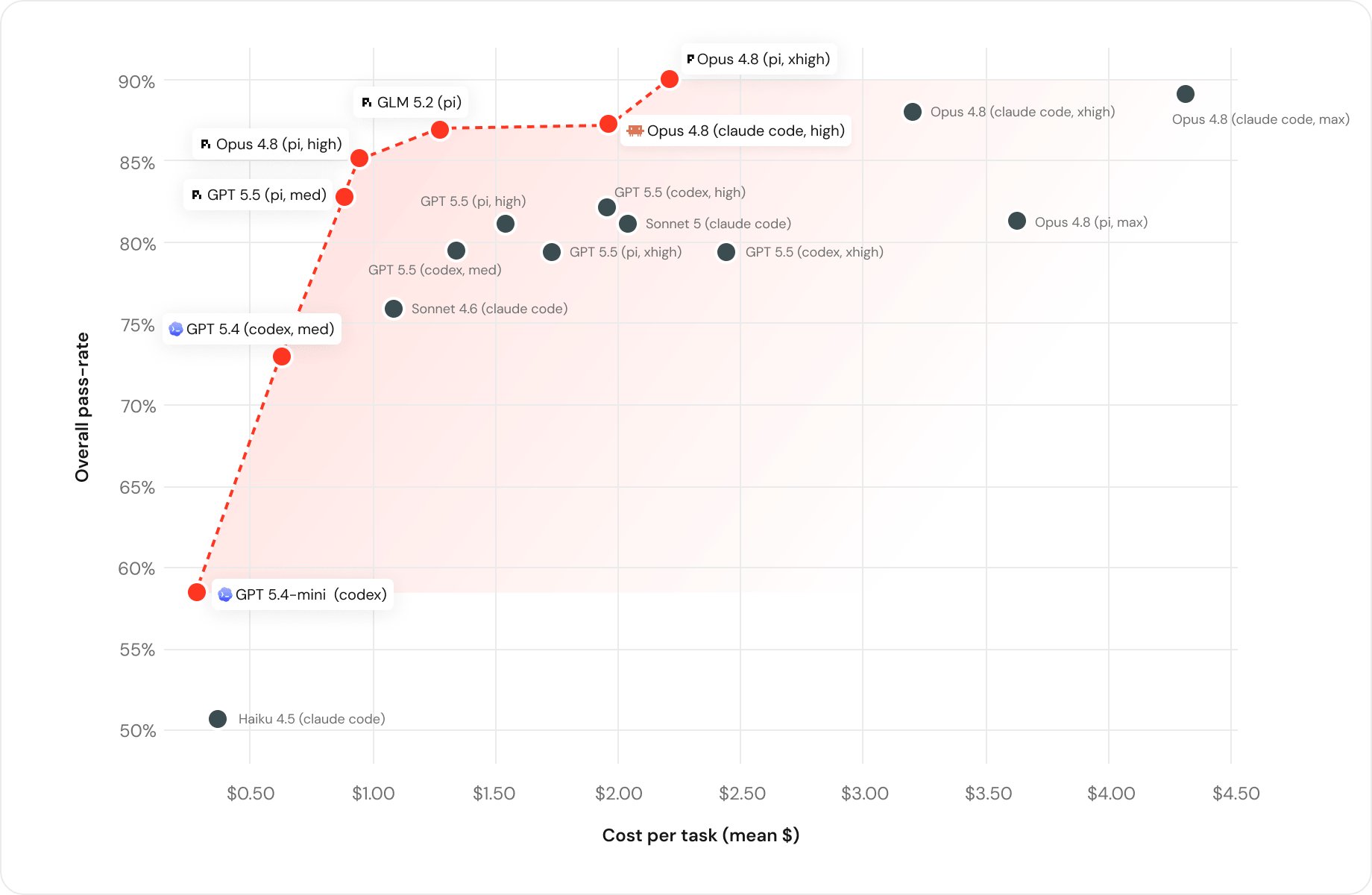
Recently, Databricks published a comprehensive evaluation of coding agents across their multi-million line codebase [1]. Spanning three major cloud environments, multiple programming languages, and thousands of developers, the study highlights a critical reality that public benchmarks often ignore:
The choice of harness can cut your AI costs by ~2x for the exact same underlying model [1].
For engineering leaders managing growing developer teams, this finding changes the math on AI adoption. It shifts the focus away from a constant race to use the most expensive frontier model, placing the emphasis instead on the architecture of the harness—the execution framework guiding the AI.
At Priset, this research strongly validates the core architectural principles we have been building upon. Here is a look at how harness-level optimization solves the challenges of cost, quality, and time-to-market.
1. Elevating Cost-Effective Models
A common misconception is that high-quality code generation requires top-tier, expensive frontier models for every single task. The Databricks benchmark demonstrates that token pricing is a poor indicator of actual task-level economics; how the model is called and structured makes a far greater difference [1].
By utilizing a robust harness that manages context and structures logic beforehand, we are able to use lightweight, cost-effective models like Gemini 3 Flash for approximately 90% of routine development tasks.
Because the harness handles the heavy lifting of context organization, these smaller models perform far beyond their standard class. The result is a substantial reduction in API spend without a compromise in the quality of the generated code.
2. Solving the Pull Request (PR) Bottleneck
Generating thousands of lines of code in seconds sounds impressive, but it often creates a massive bottleneck down the line. When AI agents write code in a "black box" without human oversight, senior engineers must spend hours debugging and cleaning up chaotic pull requests.
This is why we designed the Glass Box workflow.
Instead of jumping straight from a prompt to code generation, in the Architect Mode, Priset harness generates several structural Implementation Blueprints first. Developers can:
- Review the proposed blueprints and choose the one that architecturally aligns with what they want to implement.
- Edit the chosen blueprint to add or remove particular set of inctructions.
- Pause and resume execution without losing natively cached context.
- Use the Q&A Mode to interrogate the generated code (before creating PR) and check for edge use-cases.
Keeping the developer in the loop prevents chaotic code from entering your repository, keeping your PR reviews clean and efficient.
3. The True Expense: The Cost of Late Delivery
In software engineering, API token costs are a line item. Late-to-market delivery and lost opportunities are existential business costs.
When code generation lacks architectural planning, velocity drops as teams get bogged down in refactoring cycles. By enforcing standard software engineering workflows—where planning always precedes coding and QC checks/testing always precede creating a PR—the Glass Box workflow helps preserve both velocity and software quality.
By keeping development cycles predictable and reducing technical debt, engineering teams can ship features on time, directly reducing the opportunity cost of delayed product launches.
4. Run a Real-World Evaluation: Introducing Our 2-Month Trial
Measuring the true impact of an AI engineering partner is difficult to do in a couple of weeks. A standard 14-day trial rarely gives engineering leaders enough time to see how a tool performs across multiple sprint planning cycles, standups, and release dates.
To help teams evaluate these harness-level optimizations with zero rush, we are extending our standard trial period from 14 days to 2 months.
This extended window allows you to:
- Run Priset across multiple sprint cycles.
- Compare API cost differences between default models and previous setups.
- Track real-world velocity gains, pull request cycle times, and code quality over time.
We believe that once you see the impact of a structured, harness-first workflow, you won't want to go back to blind code generation.
👉 Ready to optimize your team's workflow? Get started with our extended 2-month trial today.
References
- Databricks Engineering. (2026). Benchmarking Coding Agents on Databricks' Multi-Million Line Codebase. https://www.databricks.com/blog/benchmarking-coding-agents-databricks-multi-million-line-codebase
Priset's Glass Box AI is available now for VS Code, Visual Studio and JetBrains. Experience transparent, 100x velocity today.