The AI Model is a Commodity. Your IDE's 'Harness' is the Real Moat.

· 4 min read
Priset AI
The AI Engineering Partner

The AI Model is a Commodity. Your IDE's 'Harness' is the Real Moat.

Over the last few weeks, the AI industry has been consumed by model leaks. We’ve seen hype surrounding Anthropic’s "Mythos" model, ongoing debates about Gemini's enterprise security, and anticipation for the next GPT iteration.

Everyone is obsessing over the engines. But a subtle, far more important shift is happening in the way elite developers write code.

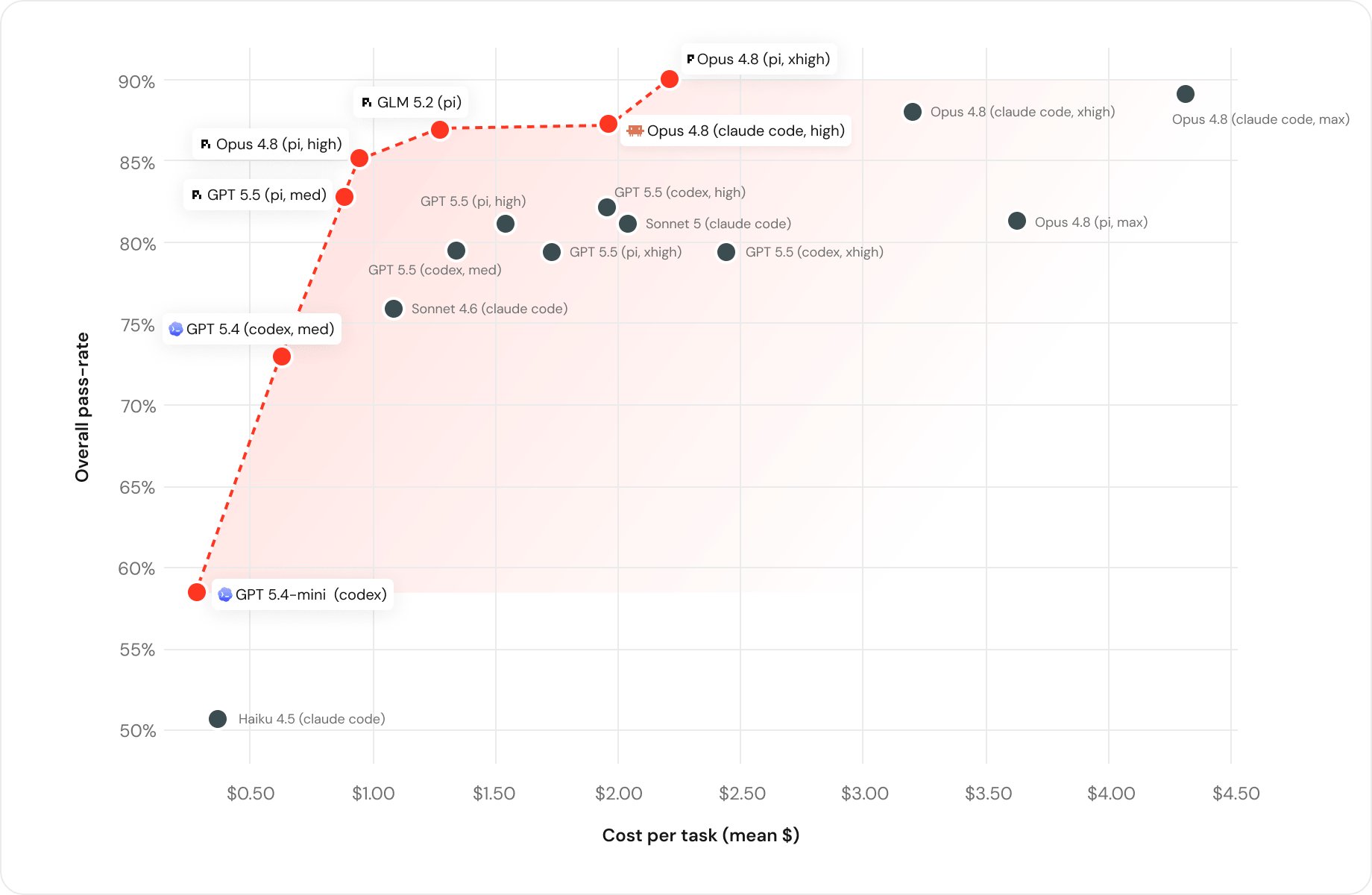
Recently, at a developer meetup in Riga, a field engineer from one of the major AI coding tools admitted something that validates everything we’ve been building at Priset: The harness now matters more than the AI model.

We have officially moved from prompt engineering to context engineering, and now, to harness engineering. But what does that actually mean for you as a developer?

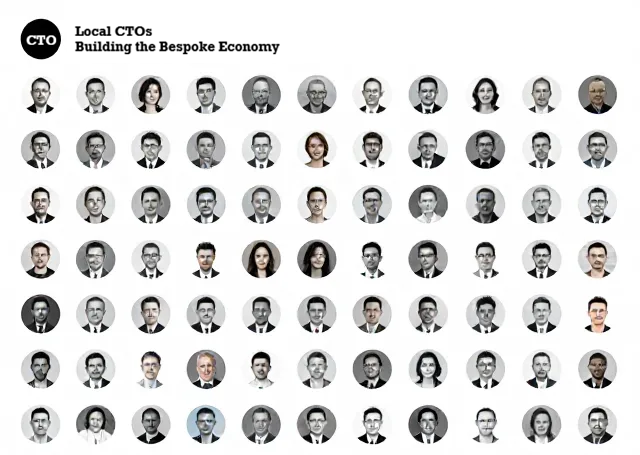
1,000 Local CTOs: Building the Bespoke Economy

· 5 min read
Priset AI
The AI Engineering Partner

1,000 Local CTOs: Building the Bespoke Economy

Ten days ago, Forbes published an article titled "Future-Proof Your Career In 2026 As Meta Cuts Another 700 Jobs." It detailed how Meta slashed 700 more jobs across its operations, while simultaneously offering executives up to $1 billion in stock incentives.

The justification? Mark Zuckerberg was quoted saying that what used to take a large team is now being done "single-handedly with just one AI-powered employee."

The corporate message is loud and clear: The Junior Dev is dead. The entry-level white-collar job is dead. Companies are using black-box AI to hollow out the middle class of the tech industry, turning what used to be teams of developers into single operators to maximize executive payouts.

The Forbes article ended with a warning from corporate America: “Not on board with AI? Step aside.”

To survive this new era and beg to keep your job, the article listed the "skills that matter most in the AI era right now":

  • Critical thinking
  • Creative problem solving
  • Innovation
  • Systems thinking
  • General AI fluency
  • Applied AI and workflow development/integration (role-specific)

Look closely at that list. Read it again.

Those are not the skills of an obedient corporate employee. Those are the exact skills of a Tech Founder.

So, my advice to developers, students, and engineers facing this corporate landscape isn't to "step aside."

It is to step outside.

The Pair Programming Paradigm: Why We Built a Glass Box, Not a Black Box

· 6 min read
Priset AI
The AI Engineering Partner

The Pair Programming Paradigm: Why We Built a Glass Box, Not a Black Box

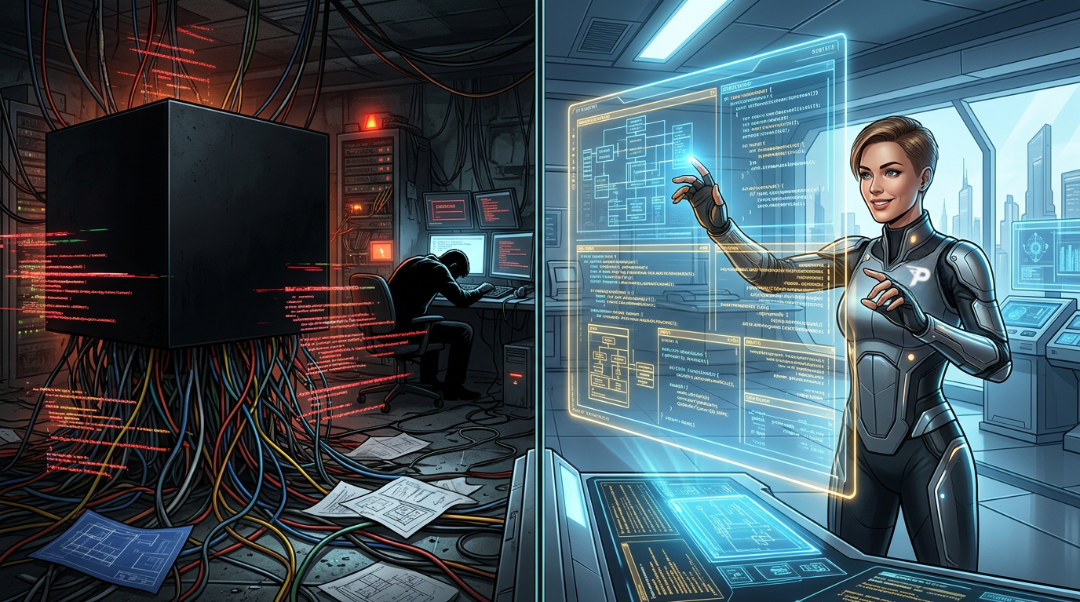
There’s a dangerous trend happening in the world of AI developer tools right now. The industry is pushing developers toward a "Black Box" paradigm—an environment where you give an autonomous AI a prompt, cross your fingers, and wait for it to report back.

It acts like a blind servant: you hand off a task, it disappears into the dark, and eventually returns with finished code.

There is just one massive problem with this approach: it generates an incredible amount of waste.

Industry reports and our own testing show that in the initial stages of product creation, developers using black-box AI tools end up throwing away up to 80% of the output. Why? Because software engineering isn't just about typing lines of code; it's about context, architecture, and micro-corrections. When you rely on the "Slot Machine" prompting cycle, you aren't engineering anymore—you're just pulling a lever and hoping the AI hallucinated the same architecture you had in your head.

At Priset, we vehemently reject the Black Box. We are building a Glass Box Pair Programmer.

The Junior Dev is Dead. Long Live the Student Founder.

· 5 min read
Priset AI
The AI Engineering Partner

The Junior Dev is Dead. Long Live the Student Founder.

Entry-level developer jobs are down. But the demand for custom software is up 300%. The math isn't broken—the model is.

For the last three years, computer science students have been told a lie: Grind LeetCode, memorize algorithms, beg for an internship, and maybe you'll get a Junior Dev role. But in 2026, the traditional "Junior Dev" role—someone who writes boilerplate code and fixes minor bugs—has been swallowed by the black box, slot-machine AI.

We are officially calling it. The Junior Dev is dead.

But from its ashes rises something infinitely more powerful: The Student Founder.

The Blast Radius of Black Box AI: Why Amazon’s Outage Proves We Need the 'Glass Box'

· 5 min read
Priset AI
The AI Engineering Partner

The Blast Radius of Black Box AI: Why Amazon’s Outage Proves We Need the 'Glass Box'

Yesterday, the news broke that Amazon’s e-commerce group summoned its engineers to a mandatory "powwow" following a series of severe outages. The culprit? According to internal briefings leaked to the FT, it was a trend of incidents characterized by a “high blast radius” and “Gen-AI assisted changes.”

At one point, tens of thousands of users experienced checkout failures and app crashes. As a fix, Amazon is now requiring junior and mid-level engineers to get senior sign-off on any AI-assisted changes.

At Priset, we read this and think, "We told you so." We saw the inevitable collision course of the "Black Box" AI movement.

When the industry pushed for autonomous, "agentic" AI that operates in the shadows—pushing 100s of Pull Requests (PRs) and sometimes even reviewing itself—they built a slot machine instead of a tool. They promised unprecedented speed, but as APIContext CEO Mayur Upadhyaya noted, “failures can propagate faster and in less predictable ways... because the change logic wasn't written by a human in the traditional sense.”

This is exactly why Priset champions the Glass Box approach. AI shouldn't be an autonomous Android running wild in your repos; it should be Power Armor worn by an empowered human architect.

Here is why the Black Box approach fails at the enterprise level, and why Priset’s Glass Box methodology is the only sustainable path forward:

Is the '100x Developer' Real? An Honest Look at Priset’s Delivery Velocity

· 5 min read
Priset AI
The AI Engineering Partner

Is the '100x Developer' Real? An Honest Look at Priset’s Delivery Velocity

Recently, an enterprise client asked us a very direct question: "If we roll out Priset across our entire AppDev department, realistically, how much faster will we get?"

Our motto at Priset is "The 100x Developer is Here." So, our instinctive response was to tell them to take their current non-AI process velocity and multiply it by 100.

But as engineers, we don't like relying on gut feelings. We operate a "Glass Box," not a black box, and that philosophy extends to how we market our product. To give our enterprise partners an airtight, mathematically sound answer, we sat down and analyzed six of our most recent real-world deliverables—ranging from legacy tech modernization to full mobile app scaffolding.

What we found surprised even us: 100x is actually a highly conservative baseline.

Here is the raw data, the statistical breakdown, and the honest reality of what Enterprise Engineering teams can expect when they equip their engineers with Priset.

From Code Monkey to Exhausted Reviewer: Escaping the Black Box Trap

· 5 min read
Priset AI
The AI Engineering Partner

From Code Monkey to Exhausted Reviewer: Escaping the Black Box Trap

We were promised Star Trek. We were told AI would liberate us from the drudgery of boilerplate, giving us hours of deep, uninterrupted focus to architect brilliant solutions.

Instead, the reality for most developers in 2026 feels a lot closer to Elysium.

A recent article in Business Insider (link to article) highlighted a growing, unspoken crisis in our industry: AI Fatigue. As engineer Siddhant Khare brilliantly points out in the piece, we are suffering from a "paradox of productivity." AI generates code instantly, but rather than reducing our cognitive load, it has multiplied it.

The tool that was supposed to save our brains is currently frying them. Why? Because the industry built Androids to replace us, when what we actually needed was Power Armor.

The End of 'Good Enough' - Unlocking the $300 Bespoke App Economy.

· 4 min read
Priset AI
The AI Engineering Partner

The End of 'Good Enough': Unlocking the $300 Bespoke App Economy

The software market has a massive, invisible gap.

At the top, you have Enterprises paying millions for custom software. In the middle, you have SMBs forcing their unique businesses into generic, "one-size-fits-all" SaaS products because that’s all they can afford.

But what about the local bakery? The independent mechanic? The boutique gym? They are running on spreadsheets and paper because bespoke software costs $30,000, and they only have $300.

Priset changes the math. And when you change the math, you change the market.

The CLI is for Scripts. The Glass Box is for Systems.

· 4 min read
Priset AI
The AI Engineering Partner

The CLI is for Scripts. The Glass Box is for Systems

There is a seductive speed to the Command Line Interface (CLI). It feels raw, fast, and powerful. For years, the "10x Developer" archetype was someone living in a terminal, piping commands and executing scripts without ever touching a mouse.

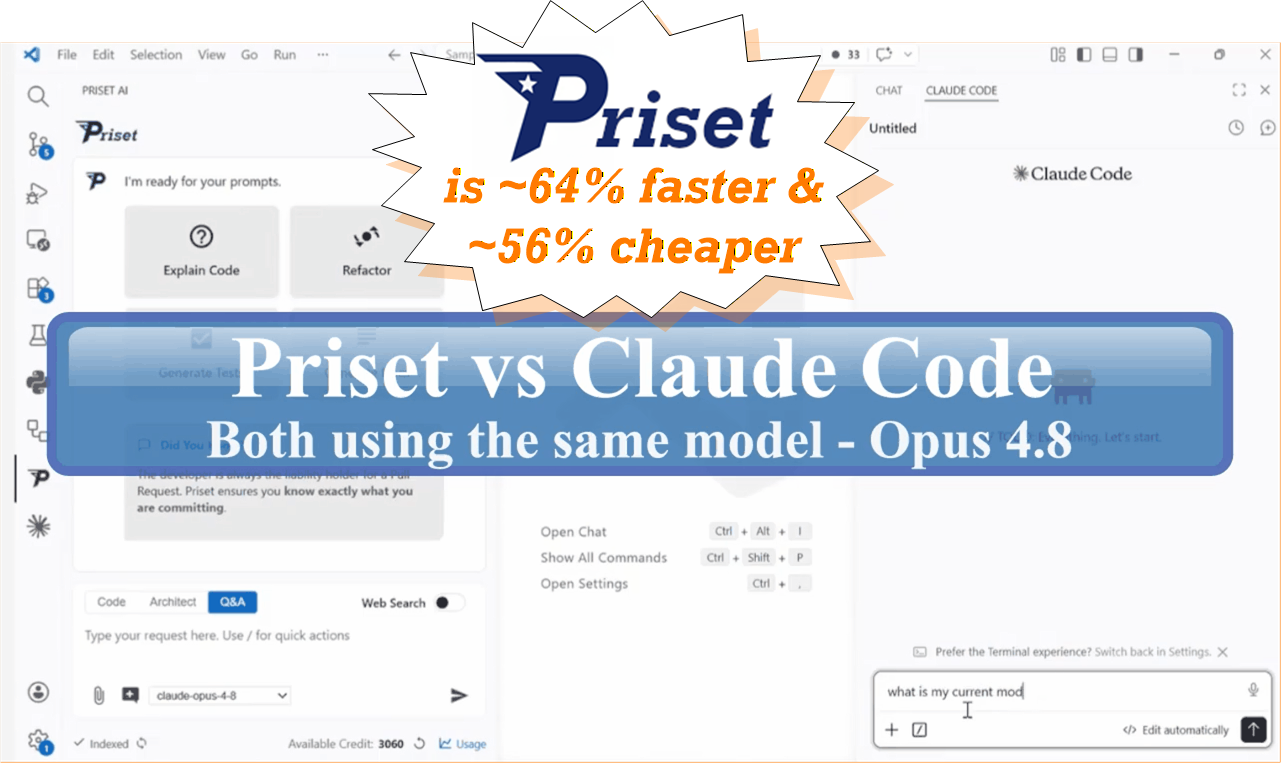
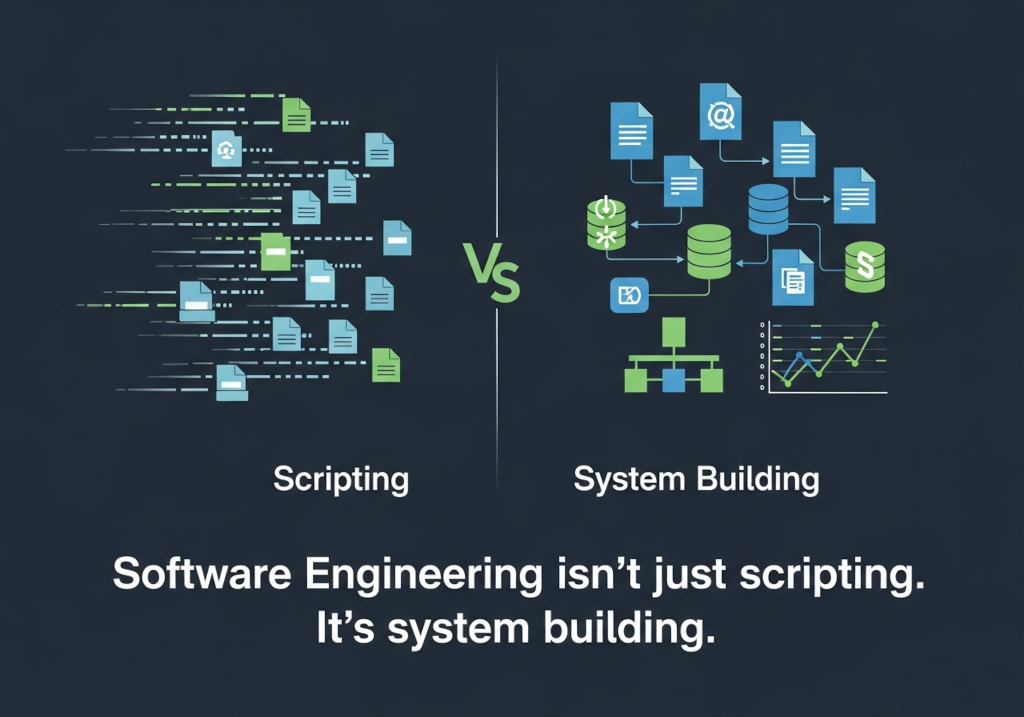
In the age of AI, tools like Claude Code or autonomous agents have doubled down on this "Terminal Mode." You type a prompt, the text streams by, and a file changes. For a Python script or a quick utility function, it is undeniably fast.

But software engineering isn't just scripting. It’s system building.

When you are refactoring a legacy monolith, migrating WCF to .NET 9, or debugging a race condition in a React frontend, "speed" isn't measured by how fast text appears on a screen. It's measured by context, safety, and control.

This is why we built the Glass Box. Because while the CLI is for scripts, the IDE is for systems.

Architecture vs. Archaeology - How I Survived an Acquisition Without a Map

· 4 min read
Priset AI
The AI Engineering Partner

By a Co-Founder at Priset

Architecture vs. Archaeology - How I Survived an Acquisition Without a Map

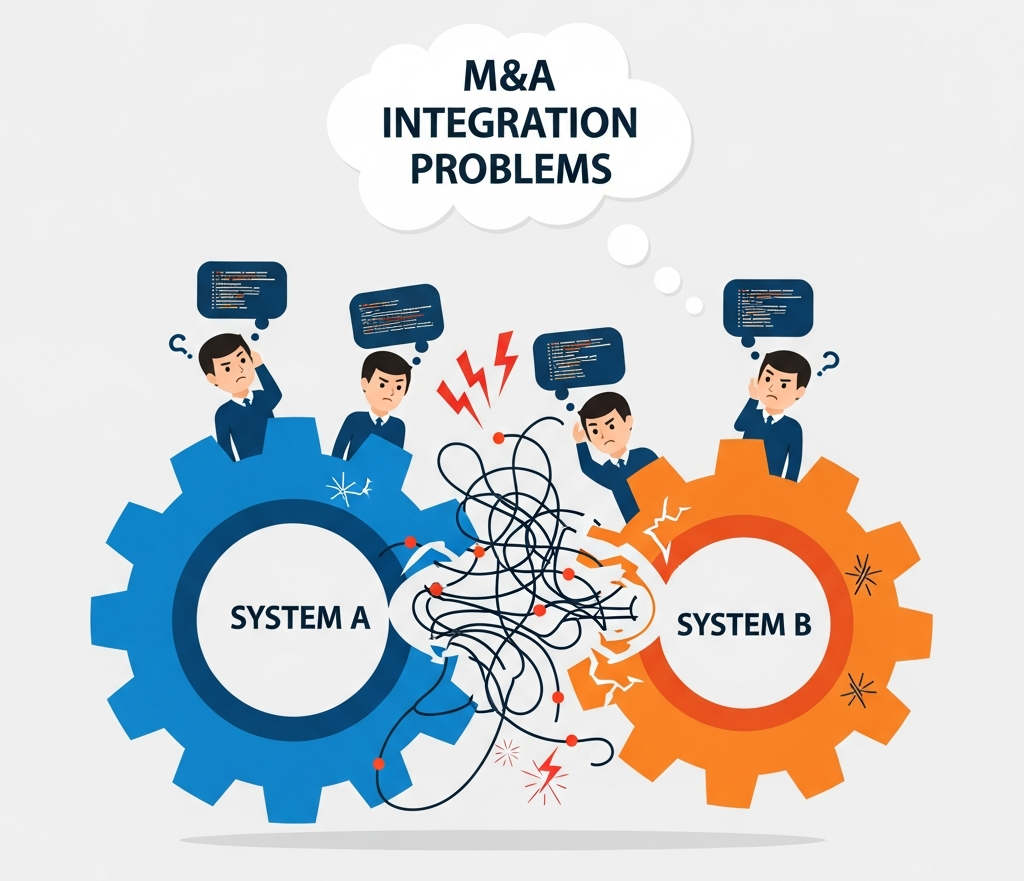
A few years ago, I served as an architect during a major enterprise acquisition. On paper, the deal was a masterpiece. In reality, it was a technical nightmare.

We were tasked with migrating the acquired company’s operational system and procedures, their heavily customized data handling, and a proprietary client tool. There was almost no documentation. To make matters worse, the original engineering team was—understandably—uncooperative. Fearing they would be made redundant the moment we "figured out" their system, they held the institutional knowledge hostage.

I spent months doing "Code Archaeology." I wasn't building for the future; I was digging through layers of undocumented, "black box" logic just to understand how the business actually functioned.

Creativity is the Bottleneck, Not Syntax - The New Era of the 100x Developer

· 4 min read
Priset AI
The AI Engineering Partner

Creativity is the Bottleneck, Not Syntax - The New Era of the 100x Developer

For the last fifty years, the greatest barrier to innovation hasn't been a lack of good ideas. It has been the Syntax Tax.

As developers, we have spent 90% of our careers acting as translators. We take a creative, human solution and spend weeks—or months—painstakingly translating it into a language a machine can understand. We wrestle with brackets, fight with legacy dependencies, and spend late nights debugging boilerplate code that has nothing to do with the actual problem we are trying to solve.

In this old world, syntax was the bottleneck.

But at Priset, we’ve reached a tipping point. With the advent of autonomous, multimodal engineering partners, the "How" is becoming a solved problem. And that changes everything.

Your AI Co-Pilot Can't Explore. Yours Should.

· 4 min read
Priset AI
The AI Engineering Partner

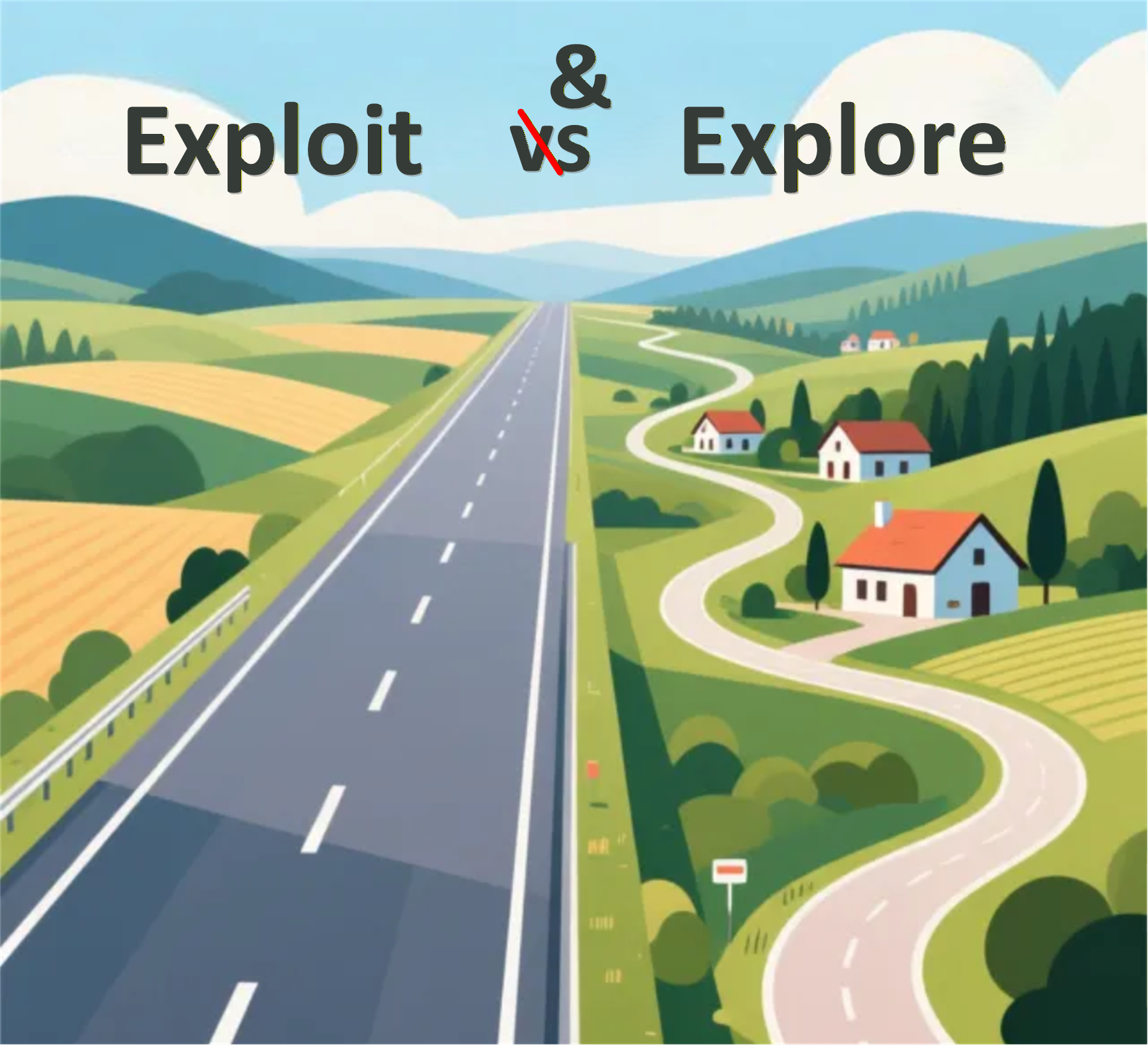
Your AI Co-Pilot Can't Explore. Yours Should. In every business, on every team, there are two fundamental forces at play: Explore and Exploit.

Exploit is the relentless optimization of what you already know works. It's about efficiency, predictability, and minimizing risk. It's the Walmart shopping trip: you have a list, you know the aisles, and your goal is to get in and out as cheaply and quickly as possible. This is the domain of spreadsheets, quarterly targets, and rational decision-making.

Explore is the messy, uncertain, and often illogical search for what you don't know. It's about taking chances, getting lucky, and discovering new opportunities. It's the TJ Maxx trip: you wander the aisles aimlessly, not looking for anything in particular, hoping to stumble upon a brilliant find. This is the domain of creativity, intuition, and "wacky ideas."

As the brilliant marketing philosopher Rory Sutherland has argued, any healthy system—be it a business, an ecosystem, or a human life—needs a dynamic balance between these two forces.

But in the modern corporate world, the scales have tipped dangerously in one direction.

From Bedside to Build - How a Priset Engineer Solved a Real-World Hospital Bottleneck

· 5 min read
Priset AI
The AI Engineering Partner

How a Priset Engineer Solved a Real-World Hospital Bottleneck By a Lead Engineer at Priset

Even working at Priset, I held a firm belief: "Vibe coding is only good for prototypes."

As an architect, I've tested plenty of AI coding tools. My verdict was always the same: great for small functions, but for a production-grade application, the manual verification and "interviewing" of the AI takes more effort than just writing the code yourself.

But yesterday, a personal problem forced me to challenge that belief. The result? I built a complex, production-ready React Native and .NET 9 application in a single day, using the very tool I help build.

Here is how I went from an idea to a potential App Store submission in 24 hours, with zero prior experience in mobile development.

Case Study - Migrating a Legacy .NET WCF App in 12 Minutes with Priset

· 4 min read
Priset AI
The AI Engineering Partner

Migrating a Legacy .NET WCF App in 12 Minutes with Priset

For decades, legacy modernization has been one of the most dreaded tasks in software engineering. It's a high-risk, low-reward process that consumes months of developer time, costs hundreds of thousands of dollars, and often ends in failure.

We believe that era is over.

To prove it, we put Priset to the ultimate test: migrating a real-world, multi-project legacy Windows Communication Foundation (WCF) service to a modern .NET 9 architecture. We didn't use a canned demo or a simplified example. We did it live, and we recorded the entire process.

The result: A successful migration and a running application in 12 minutes, for a total cost of $4.07.

Here's the full timelapse video.

AI Won't Pay Your Mortgage. A Better Career Will.

· 5 min read
Priset AI
The AI Engineering Partner

Priset vibe coding redefined

There are two conversations happening right now about AI. On one hand, we have grand, sweeping visions of a future with "sustainable abundance for all" - a post-work utopia where technology solves humanity's biggest problems. On the other hand, we have a raw, anxious, and deeply personal conversation happening in the trenches of the software industry.

This second conversation sounds a lot like this:

  • "Are we creating a 'talent dead zone' by not hiring juniors?"
  • "Are we burning out our senior developers to cover the gap?"
  • "How does abstract 'abundance' help me pay my mortgage or my kids' medical bills if my job is at risk?"

At Priset, we believe the path to the aspirational future runs directly through solving the anxieties of the present. The grand vision of a Star Trek-style utopia, where technology empowers humanity to explore and create, is built one pragmatic step at a time. It's a future we must consciously choose over an alternative, automated dystopia. And for us, that choice starts with how we build tools for developers today.

Your IDE Just Got a 100x Upgrade: Announcing Priset for VS Code

· 4 min read
Priset AI
The AI Engineering Partner

Your IDE is your sanctuary. It's where ideas become reality, where problems are solved, and where you, the developer, spend countless hours perfecting your craft. We believe that the most powerful tools shouldn't force you to leave that sanctuary. They should meet you right where you are.

Today, we're closing that gap. We are thrilled to announce the official launch of the Priset extension for Visual Studio Code!

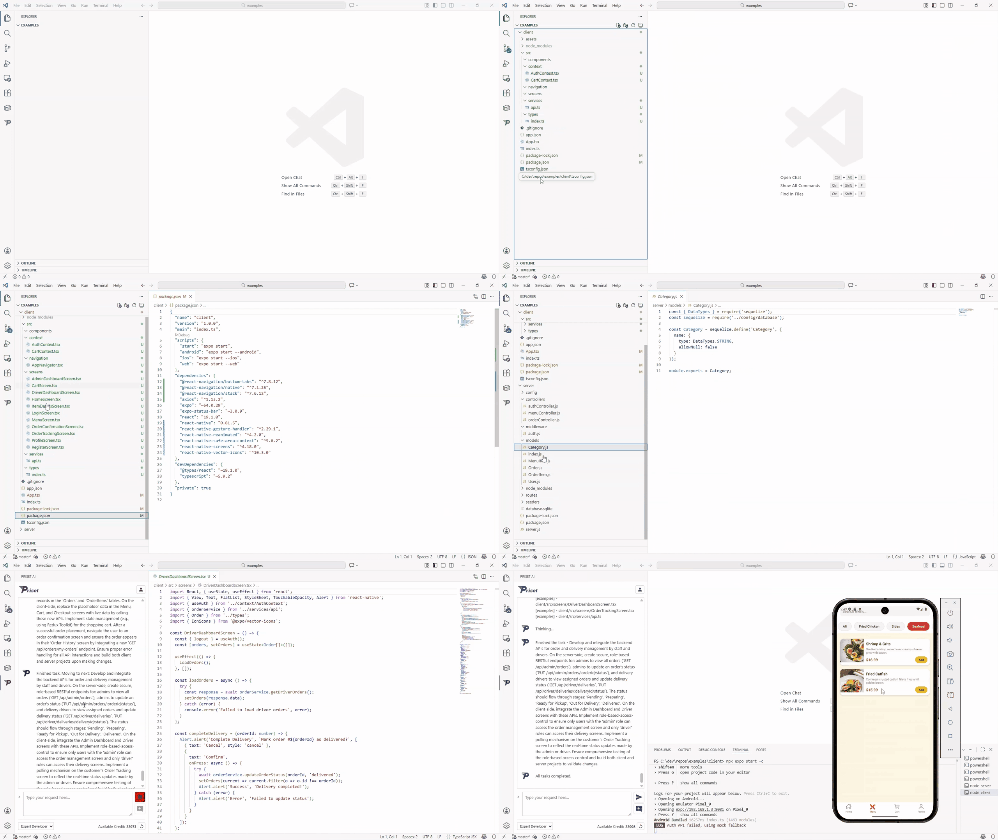
You can now harness the full power of an autonomous AI engineering partner without ever leaving your editor. This isn't just about code completion; it's about embedding an entire, automated development lifecycle directly into your workflow.

But what does autonomous AI in your IDE actually look like?

Something like this:

Priset building a native mobile app from a single prompt

It's Not Just About Speed - Three User Stories That Reveal the True Power of an AI Engineering Partner

· 5 min read
Priset AI
The AI Engineering Partner

Priset background blog

When we started building Priset, we had a clear, audacious vision: to create an AI engineering partner that could amplify a developer's productivity by orders of magnitude. We talked about a "100x" improvement, about automating entire workflows, and about freeing developers from the tedious tasks that stifle innovation.

These were big promises.

Now, as Priset is in the soft launch and in the hands of our first users, we're starting to get feedback. And while we expected to hear about speed, the stories we're receiving go so much deeper. They reveal a fundamental shift in the nature of software development itself.

We wanted to share three pieces of feedback that stopped us in our tracks and validated our mission in ways we hadn't even fully articulated.

Beyond the Vibe - How Autonomous AI is Redefining Developer Flow

· 5 min read
Priset AI
The AI Engineering Partner

Priset vibe coding redefined

Every developer knows the feeling.

It's that magical, caffeine-fueled state of pure creative immersion. The outside world fades away, the terminal becomes an extension of your thoughts, and code flows from your mind to the screen with almost zero friction. UI elements dance into place. API endpoints materialize. The logic just... works.

We call it "vibe coding." It's the closest our craft gets to pure artistry, molding digital clay at the speed of thought. It's the state where we feel most powerful, most creative, and most alive as builders.

And for years, it's had a glass ceiling.