6 posts tagged with "future-of-work"

View All Tags

The AI Model is a Commodity. Your IDE's 'Harness' is the Real Moat.

· 4 min read

Priset AI
The AI Engineering Partner

The AI Model is a Commodity. Your IDE's 'Harness' is the Real Moat.

Over the last few weeks, the AI industry has been consumed by model leaks. We’ve seen hype surrounding Anthropic’s "Mythos" model, ongoing debates about Gemini's enterprise security, and anticipation for the next GPT iteration.

Everyone is obsessing over the engines. But a subtle, far more important shift is happening in the way elite developers write code.

Recently, at a developer meetup in Riga, a field engineer from one of the major AI coding tools admitted something that validates everything we’ve been building at Priset: The harness now matters more than the AI model.

We have officially moved from prompt engineering to context engineering, and now, to harness engineering. But what does that actually mean for you as a developer?
1,000 Local CTOs: Building the Bespoke Economy

· 5 min read
Priset AI
The AI Engineering Partner

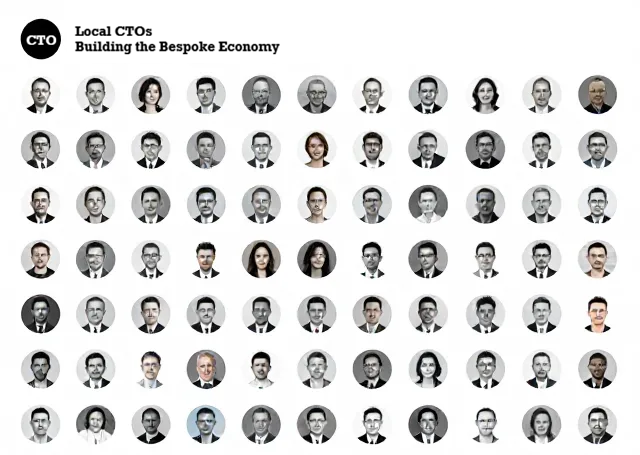
1,000 Local CTOs: Building the Bespoke Economy

Ten days ago, Forbes published an article titled "Future-Proof Your Career In 2026 As Meta Cuts Another 700 Jobs." It detailed how Meta slashed 700 more jobs across its operations, while simultaneously offering executives up to $1 billion in stock incentives.

The justification? Mark Zuckerberg was quoted saying that what used to take a large team is now being done "single-handedly with just one AI-powered employee."

The corporate message is loud and clear: The Junior Dev is dead. The entry-level white-collar job is dead. Companies are using black-box AI to hollow out the middle class of the tech industry, turning what used to be teams of developers into single operators to maximize executive payouts.

The Forbes article ended with a warning from corporate America: “Not on board with AI? Step aside.”

To survive this new era and beg to keep your job, the article listed the "skills that matter most in the AI era right now":

  • Critical thinking
  • Creative problem solving
  • Innovation
  • Systems thinking
  • General AI fluency
  • Applied AI and workflow development/integration (role-specific)

Look closely at that list. Read it again.

Those are not the skills of an obedient corporate employee. Those are the exact skills of a Tech Founder.

So, my advice to developers, students, and engineers facing this corporate landscape isn't to "step aside."

It is to step outside.

From Code Monkey to Exhausted Reviewer: Escaping the Black Box Trap

· 5 min read
Priset AI
The AI Engineering Partner

From Code Monkey to Exhausted Reviewer: Escaping the Black Box Trap

We were promised Star Trek. We were told AI would liberate us from the drudgery of boilerplate, giving us hours of deep, uninterrupted focus to architect brilliant solutions.

Instead, the reality for most developers in 2026 feels a lot closer to Elysium.

A recent article in Business Insider (link to article) highlighted a growing, unspoken crisis in our industry: AI Fatigue. As engineer Siddhant Khare brilliantly points out in the piece, we are suffering from a "paradox of productivity." AI generates code instantly, but rather than reducing our cognitive load, it has multiplied it.

The tool that was supposed to save our brains is currently frying them. Why? Because the industry built Androids to replace us, when what we actually needed was Power Armor.

The End of 'Good Enough' - Unlocking the $300 Bespoke App Economy.

· 4 min read
Priset AI
The AI Engineering Partner

The End of 'Good Enough': Unlocking the $300 Bespoke App Economy

The software market has a massive, invisible gap.

At the top, you have Enterprises paying millions for custom software. In the middle, you have SMBs forcing their unique businesses into generic, "one-size-fits-all" SaaS products because that’s all they can afford.

But what about the local bakery? The independent mechanic? The boutique gym? They are running on spreadsheets and paper because bespoke software costs $30,000, and they only have $300.

Priset changes the math. And when you change the math, you change the market.

Creativity is the Bottleneck, Not Syntax - The New Era of the 100x Developer

· 4 min read
Priset AI
The AI Engineering Partner

Creativity is the Bottleneck, Not Syntax - The New Era of the 100x Developer

For the last fifty years, the greatest barrier to innovation hasn't been a lack of good ideas. It has been the Syntax Tax.

As developers, we have spent 90% of our careers acting as translators. We take a creative, human solution and spend weeks—or months—painstakingly translating it into a language a machine can understand. We wrestle with brackets, fight with legacy dependencies, and spend late nights debugging boilerplate code that has nothing to do with the actual problem we are trying to solve.

In this old world, syntax was the bottleneck.

But at Priset, we’ve reached a tipping point. With the advent of autonomous, multimodal engineering partners, the "How" is becoming a solved problem. And that changes everything.

AI Won't Pay Your Mortgage. A Better Career Will.

· 5 min read
Priset AI
The AI Engineering Partner

Priset vibe coding redefined

There are two conversations happening right now about AI. On one hand, we have grand, sweeping visions of a future with "sustainable abundance for all" - a post-work utopia where technology solves humanity's biggest problems. On the other hand, we have a raw, anxious, and deeply personal conversation happening in the trenches of the software industry.

This second conversation sounds a lot like this:

  • "Are we creating a 'talent dead zone' by not hiring juniors?"
  • "Are we burning out our senior developers to cover the gap?"
  • "How does abstract 'abundance' help me pay my mortgage or my kids' medical bills if my job is at risk?"

At Priset, we believe the path to the aspirational future runs directly through solving the anxieties of the present. The grand vision of a Star Trek-style utopia, where technology empowers humanity to explore and create, is built one pragmatic step at a time. It's a future we must consciously choose over an alternative, automated dystopia. And for us, that choice starts with how we build tools for developers today.