The Blast Radius of Black Box AI: Why Amazon’s Outage Proves We Need the 'Glass Box'

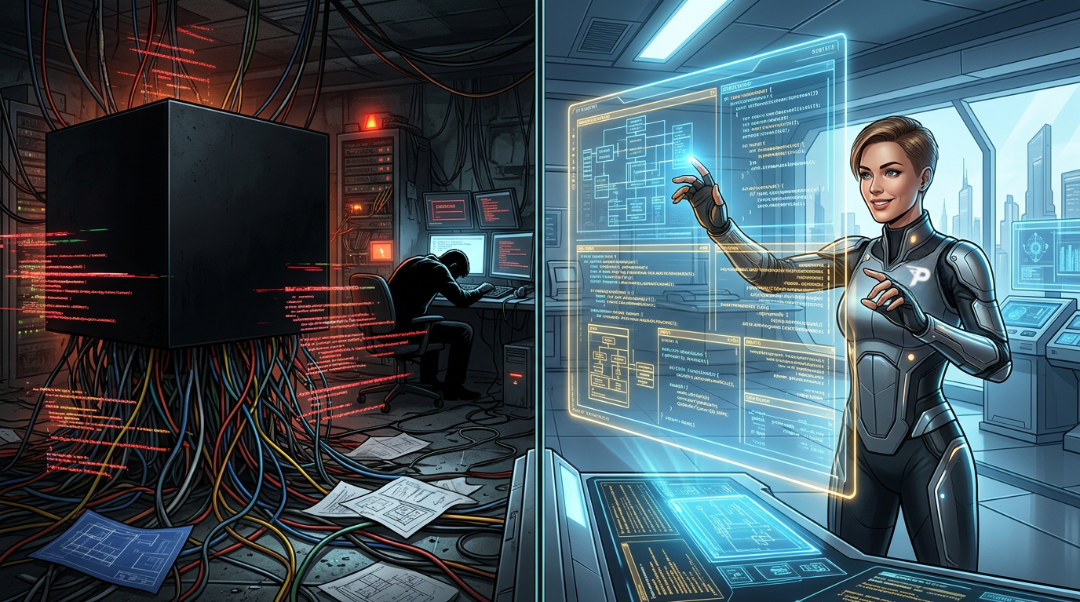
Yesterday, the news broke that Amazon’s e-commerce group summoned its engineers to a mandatory "powwow" following a series of severe outages. The culprit? According to internal briefings leaked to the FT, it was a trend of incidents characterized by a “high blast radius” and “Gen-AI assisted changes.”
At one point, tens of thousands of users experienced checkout failures and app crashes. As a fix, Amazon is now requiring junior and mid-level engineers to get senior sign-off on any AI-assisted changes.
At Priset, we read this and think, "We told you so." We saw the inevitable collision course of the "Black Box" AI movement.
When the industry pushed for autonomous, "agentic" AI that operates in the shadows—pushing 100s of Pull Requests (PRs) and sometimes even reviewing itself—they built a slot machine instead of a tool. They promised unprecedented speed, but as APIContext CEO Mayur Upadhyaya noted, “failures can propagate faster and in less predictable ways... because the change logic wasn't written by a human in the traditional sense.”
This is exactly why Priset champions the Glass Box approach. AI shouldn't be an autonomous Android running wild in your repos; it should be Power Armor worn by an empowered human architect.
Here is why the Black Box approach fails at the enterprise level, and why Priset’s Glass Box methodology is the only sustainable path forward:
1. You Need Real-Time Visibility (Not Post-Mortem Audits)
With Black Box agents, you fire off a prompt, wait 20 minutes, and get a massive PR. If the AI hallucinated 10 minutes into the task, the entire rest of the build is poisoned. With Priset, you are in the IDE. You see the code being scaffolded in real-time. If you spot a hallucination or a bad architectural turn, you simply pause, correct the AI, and continue. You are the director; the AI is your crew.
2. The Human Gateway: Review Happens Before the Repo
By the time code hits your repository as a PR, it should already be validated. In the autonomous agent model, the repo becomes a dumping ground for AI to fill up. Priset’s upcoming "Architect/Plan Only" mode ensures that the human reviews the approach and the code locally before a single line ever touches your source control.
3. The Cure for AI Fatigue
In our recent essay on the "Paradox of Productivity," we warned about AI Fatigue. When a Black Box agent submits a 1,500-line PR, the senior engineer reviewing it has to reverse-engineer the logic of a machine that has no fundamental understanding of the system. It is exhausting.
When a human uses Priset, they author the PR. The reviewer can adjust their level of scrutiny based on their working knowledge of the human colleague who created it. You aren't auditing a rogue machine; you are reviewing your teammate’s intent, knowing they used Power Armor to execute the heavy lifting.
4. The Two-Human Rule
Code quality thrives on human consensus. A PR should be a conversation between the Creator and the Reviewer. The Black Box model reduces this to one exhausted human trying to police an infinite assembly line of AI outputs. The Glass Box model preserves the two-human rule: one human directs the AI to write the code, and another human validates the architectural impact.
5. AI Knows "How," Humans Know "Why"
An AI can write a beautifully optimized sorting algorithm, but it has zero context about the complex, unwritten business logic of why a specific local SMB bakery needs their inventory routed a certain way on Tuesday mornings. Humans possess the context. When you hand the keys over to a Black Box, you lose the business logic.
6. Less Hallucinations = True Velocity
Move fast and break things works until a checkout system goes down for six hours at the world's largest retailer. When you combine Priset's real-time hallucination-checking with a standard human review, you dramatically reduce tech debt. You aren't just writing code faster; you are shipping correct code faster. In the bespoke economy (that is coming upon the world), less tech debt equals moving faster and cheaper.
7. Protecting Your Brand
A six-hour outage is a catastrophic real-world cost. Embarrassing headlines about AI-triggered crashes destroy customer trust and brand equity. Using a Glass Box AI protects your brand image because the human never relinquishes control.
We are building tools for a Star Trek future of empowered human creativity, not an Elysium dystopia of exhausted engineers acting as janitors for AI bots.
If you are an enterprise architect tired of playing the AI slot machine, it’s time to step up to the Drafting Table.
The 100x Developer is here. And they are wearing Power Armor.
(To experience the Glass Box difference, check out Priset's Pro and Team plans, or our newly to-be-launched-very-soon Student plan.)